In Short Form Version:
From the Book:
Wow, I'm An American!
How to Live Life Like Our Nation’s Heroic Founders
COVID-19 and the GLOBAL PREDATORS—
We Are The Prey
By Peter R. Breggin MD and Ginger Ross Breggin
Robert F. Kennedy, Jr. - “No other book so comprehensively covers the details of COVID-19 criminal conduct as well as its origins in a network of global predators seeking wealth and power at the expense of human freedom and prosperity…”
Peter A. McCullough MD, MPH - “The most gripping nonfiction that just rocketed into your library. What you will learn may save you and your family in the turbulent times ahead.”
Epoch Times Book Review - “In ‘We Are the Prey’ the Breggins Offer a Cure for Our Collective COVID Woes” - READ REVIEW
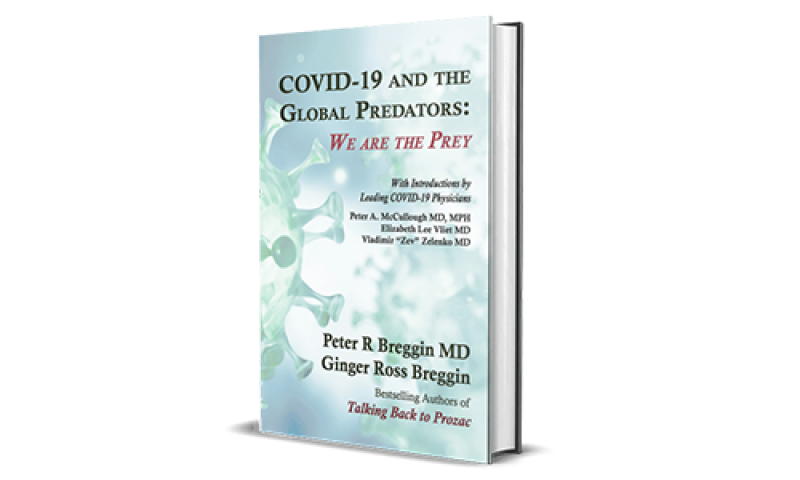
Purchase our new and most important book ever ~

COVID-19 and the Global Predators: We Are the Prey
Since January 2020 with the advent of SARS-CoV-2, the Breggin partnership has given most of their attention to the fraud and widespread falsehoods behind the Chinese virus pandemic, and the necessity of taking a determined political stand against the authoritarian and totalitarian intentions of those who are driving the COVID attack on freedom. They have written COVID-19 and the Global Predators: We Are the Prey, a bestseller that has sold more than 62,000 copies within the first three months of its official publication on September 30, 2021.
Their book has stunning introductions by three of the world’s leading COVID-19 treating physicians: Peter A. McCullough MD, MPH; Vladimir “Zev” Zelenko MD; and Elizabeth Lee Vliet MD. In addition to the three medical doctors, attorney Robert F. Kennedy, Jr., the author of The Real Anthony Fauci, has also endorsed the book as the single most comprehensive analysis of the coalition of global predators behind COVID-19:
“No other book so comprehensively covers the details of COVID-19 criminal conduct as well as its origins in a network of global predators seeking wealth and power at the expense of human freedom and prosperity, under cover of false public health policies. “ RFK, Jr.
Dr. and Mrs. Breggin believe that their new book, COVID-19 and the Global Predators: We Are the Prey, is the most important book and project of their forty years together and their individual lifetimes devoted to reform work and speaking truth to power. The writing took 18 months, often working 8-12 hours per day seven days a week, while researching and consulting with colleagues, and communicating their findings to professionals and the public.
Their book has more than 1,000 references and 651 pages, including a lengthy chronology of events and an extensive index. Many readers praise the book as the most important in years (see the Amazon comments, for example). Although scientifically and historically documented, it is also a page-turner that tells an amazing but disturbing story. It concludes with chapters about what must done to stop this avalanche of totalitarianism disguised as public health measures to manage COVID-19.
COVID-19 and the Global Predators: We Are the Prey is sold in America and worldwide through all major bookstores, such as Amazon, Barnes & Noble, and Books-a-Million. In the U.S. only, it is sold at a substantial discount by the authors on www.WeAreThePrey.com.