| Print |  E-mail
About Peter R. Breggin, MD.
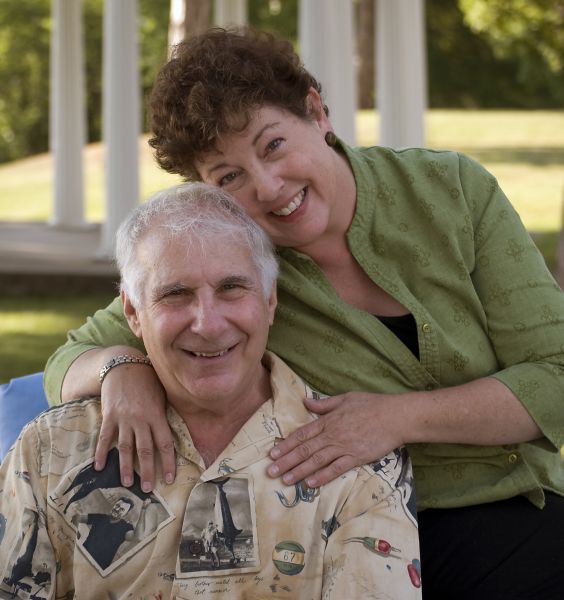
Portrait of Dr. Peter Breggin
Peter R. Breggin M.D. conducts a private practice of psychiatry in Ithaca , New York , where he treats adults, couples, and families with children. He also does consultations in the field of clinical psychopharmacology and often acts as a medical expert in criminal, malpractice and product liability suits. Before moving to Ithaca in November 2002 he was in practice for nearly thirty-five years in Washington , DC and Bethesda , Maryland . He has written dozens of scientific articles and many professional books, including Medication Madness: The Role of Psychiatric Drugs in Cases of Violence, Suicide and Crime (2008), and is on the editorial board of several journals.


In 2010 Dr. Breggin and his wife Ginger formed a new organization that continues their emphasis on bringing professional and laypersons together to share their concerns about the hazards of contemporary biological psychiatry while promoting more caring and empathic approaches to personal conflict and suffering. The new organization will sponsor an annual meeting each April in Syracuse, New York (empathictherapy.org).

View Dr. Breggin's resume and bibliography
 
Many of Dr. Breggin’s accomplishments as a reformer are documented in detail in The Conscience of Psychiatry: The Reform Work of Peter R. Breggin, M.D. (2009). This biographical tribute to Dr. Breggin’s work draws on more than half-a-century of media and more than 70 special contributions from his colleagues, as well as many other sources.

Dr. Breggin's background includes Harvard College, Case Western Reserve Medical School, a one-year internship and a three-year residency in psychiatry, including a teaching fellowship at Harvard Medical School. After his training, he accepted a two-year staff appointment at the National Institute of Mental Health (NIMH). He has taught at several universities, including a faculty appointment to the Johns Hopkins University Department of Counseling and an appointment as Visiting Scholar at SUNY Oswego in the Department of Counseling and Psychological Services in 2007-2008. He now teaches as an Adjunct Professor in the Department of Counseling and Psychological Services at SUNY Oswego.
 
    Breggin's  background is
     pure  establishment: 
    Harvard College, Case
    Western  Reserve Medical
    School,  a teaching
    fellowship at Harvard
    Medical School ...
 

  Christine Gorman,

      TIME Magazine

 
Since 1964 Dr. Breggin has been publishing peer-reviewed articles and medical books in his subspecialty of clinical psychopharmacology. He is the author of dozens of scientific articles and more than twenty professional books, many dealing with psychiatric medication, the FDA and drug approval processes, the evaluation of clinical trials, and standards of care in psychiatry. A few of the titles include Toxic Psychiatry (St. Martin’s, 1991), Talking Back to Ritalin (Perseus, revised, 2001), the Antidepressant Fact Book (Perseus, 2001) and the Ritalin Fact Book (Perseus, 2002). Others, such as The Heart of Being Helpful (1997), deal with how to help people through psychotherapy and other human services.
 
 
In the early 1990s Dr. Breggin was appointed the scientific expert for more than 100 combined Prozac suits and testified in the infamous Wesbecker trial that was secretly fixed in advance by Eli Lilly. He participated as a medical expert in a 2001-2002 California lawsuit whose resolution was associated with a new label warning for Paxil concerning withdrawal effects. Recently he was the medical expert in the first psychosurgery malpractice suit and also the first electroshock malpractice suit ever won in court. He has been a medical expert in many courtroom victories for individuals injured by medications, including numerous cases of tardive dyskinesia caused by neuroleptic drugs. He has also been a consultant to the Federal Aviation Agency (FAA) on the adverse effects of psychiatric drugs on pilots.
 
Dr. Breggin’s work has led to significant changes within the profession. In the early 1970s he conducted an international campaign to stop the resurgence of lobotomy and newer forms of psychosurgery. His reform efforts and his testimony in the Kaimowitz case in Detroit led to the termination of lobotomy and psychosurgery in the nation’s state mental hospitals, NIH, the VA, and most university centers. A public education campaign, including his 1983 medical book, Psychiatric Drugs: Hazards to the Brain, led the FDA to require a new class warning for tardive dyskinesia in 1985. In 1994 his public education campaign led to the NIH to reform some of its research policies and to end the potentially racist violence prevention initiative aimed at inner city children. The FDA’s recent recognition of numerous adverse reactions caused by the newer antidepressants — including suicidality in children and young adults, and a stimulant profile involving agitation, akathisia, hostility, aggression, and mania — closely follows observations made and publicized by Dr. Breggin over the past ten years.
 
Dr. Breggin's scientific articles can be downloaded on this website.  The list can be arranged chronologically or alphebetically.  Many of the papers were well ahead of their time, and several helped to influence the FDA to update the required warnings on all labels for antidepressant and antipsychotic medications.  All of the articles listed here are available to read without charge on this website.


COME TO DR. BREGGIN'S
EXCITING NEW CONFERENCE


Dr. Peter Breggin and Colleagues
Launch New Reform Organization &
Annual Spring Conference
 

Peter R. Breggin, MD is no longer affiliated with the Center for the Study of Psychiatry, informally known as International Center for the Study of Psychiatry and Psychology, which he founded and led from 1972-2002, and Dr. Breggin will not participate in its conferences.   Dr. Breggin and his colleagues will hold their new annual spring conference April 8-10, 2011.  Details are available at http://www.empathictherapy.org.


WARNING!

Most psychiatric drugs can cause withdrawal reactions, sometimes including life-threatening emotional and physical withdrawal problems. In short, it is not only dangerous to start taking psychiatric drugs, it can also be dangerous to stop them. Withdrawal from psychiatric drugs should be done carefully under experienced clinical supervision. Methods for safely withdrawing from psychiatric drugs are discussed in Dr. Breggin's books, Brain-Disabling Treatments in Psychiatry: Drugs, Electroshock and the Psychopharmaceutical Complex (New York: Springer Publishing Company, 2008) and Medication Madness: The Role of Psychiatric Drugs in Cases of Violence, Suicide and Crime (New York: St. Martin's Press, 2008).